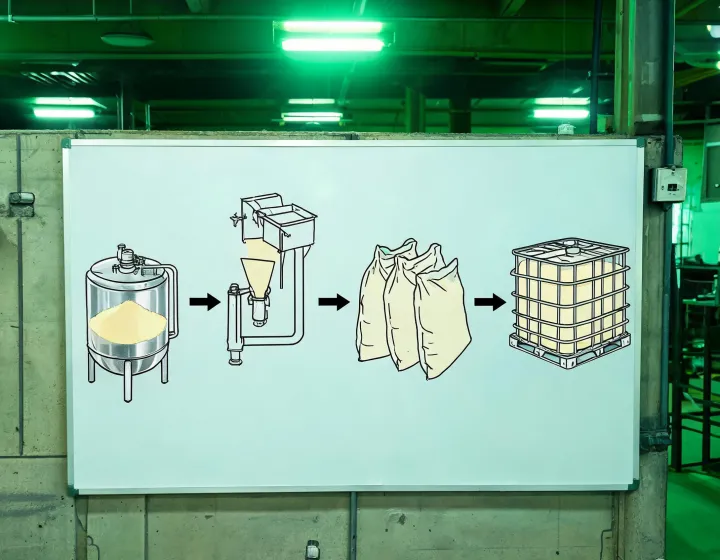
Timeline of corn starch bulk application questions on a plant whiteboard
  1. Name the process
  2. Translate to purchase fields
  3. Keep evidence open

Corn starch bulk questions that change with the application

Application context is useful only when it becomes a purchase field. Corn starch bulk for a food slurry, a paper size or an adhesive mill can share a family name and still need different moisture, particle size, ionic type and packaging. This page records those questions. It does not confirm that a grade is suitable, compliant or in stock.

Handling, storage and transport must follow the exact SDS, applicable regulations and carrier requirements. This site does not provide mixing, cooking or hazardous-use instructions. Final formulation, EHS and regulatory decisions remain with qualified parties at the buyer and the named supplier.

Application and specification matrix

Use the matrix to turn a use case into RFQ lines. Blank cells stay blank until the buyer or a named plant fills them. A related-grade SDS is not evidence for the quoted SKU.

Use context Typical purchase fields Documents still open Limitation
Food compounding Grade, moisture, particle size, food-contact intent, bag size SDS, TDS, CoA, any food-law statement the buyer requests from the plant This desk does not certify food suitability
Paper and board sizing Ionic type, solids handling, viscosity intent, IBC or bag preference Exact-product SDS and CoA method for assay Viscosity performance is not a published claim
Adhesive and binder mills Active content, pH window if named, density if named, drum or tote pack TDS plus sample acceptance criteria written by the buyer Compatibility tests stay in the buyer laboratory
Distribution and export lots Quantity unit, palletization, US destination, requested timing Transport classification on the quoted SDS, TSCA status where relevant No inventory or lead-time promise is published here

Native versus modified starch is a buyer decision

One recurring industry trade-off is native starch versus chemically modified starch. Native grades may match a simpler label and a different moisture window; modified grades may change ionic type, cook behavior or storage notes. This desk does not pick a winner. We keep the requested class on the RFQ and treat a substitution as a separate line until the buyer accepts it.

A second trade-off is corn versus tapioca origin. Botanical source can matter for allergen statements, supply geography and some process windows. Quotes that change origin without restating assay and packaging are not comparable. Public product-family pages such as SpecialChem, accessed 2026-10-19 as a product-family reference only, can help frame specification questions; they are not evidence of our inventory or a supplier relationship.

Document questions after the use case is named

How does a food slurry differ from paper size on the RFQ?

Food compounding usually freezes moisture, particle size and food-contact intent on bags. Paper sizing usually freezes ionic type, solids handling and IBC or bag preference. The process name never replaces those purchase cells.

Can a mill swap corn origin for tapioca on the same line?

Botanical source can change labeling and some process windows. A tapioca substitution stays on a second line until the buyer accepts it, even if the family name still says starch.

Where do transport classes come from for bulk lots?

UN number, packing group and any combustible-dust note follow the quoted SDS for that concentration. A specialty-chemicals brochure is not the classification for the shipped corn starch lot.

Turn the application into an RFQ

Share process context only to the extent it becomes specification, quantity, packaging and destination. We then request factory quotes on that written basis.

Please enter your name.
Please enter a valid work email.
Please enter your company.
Please describe the procurement requirement.

Submitting authorizes a review of the requirement and outreach to possible starch plants. See our Privacy Policy.